
VISION, STRATEGY and MINDSET to Support Goal Setting

photo by richard felix on unsplash

I wish you and Happy and Healthy New Year, with lots of personal fulfillment and professional achievements. I wish you to be intentional in what you want to create in your life, business, career, relationship….

 I want to start the year by sharing a few things around Goal Setting (sorry this is a rather long one).

First, I don’t like to do as everyone and part of me didn’t want to talk about goals because that’s what everyone is talking about at the moment, and yet, as I thought about it, I couldn’t find a reason good enough to not talk about it, because goal setting is really important if you want to create a life by design where you are intentional about what you want and how to get it, as opposed to a life by default where you just go where life takes you.

Note 1: there is nothing wrong with the latter, but I find it so much more exciting and inspiring to create the life I (and my family) want.

Note 2: we might think we are in control and intentional in our lives but what I discovered when engaging in my coaching journey is that there is much, much, much (yes 3 times) more that we can choose and create than we think.

There is no right way to set goals and follow through and I’ll just share some pieces of information and experience to hopefully help you find your own way to set a direction for this new year. My perspective is that Goals are just a tool as part of the Strategy to get from where we are in the Present, to our Vision. And to get to our Vision, we also need to work on our Mindset. So here we go with Vision, Strategy and Mindset.

VISION

To create your vision, you may ask yourself 2 very simple questions:

  • What would you like?  5, 10, 20 years from now? No censorship. We are pretty good at envisioning what we think we can get but not what we really want.
  • What would having that do for you? This is a key question to i) know why you are doing this ii) uncover some hidden desire/needs that you can actually start working on right now, without waiting to have achieved you primary goal/vision.

STRATEGY

  • Break down: your vision and long term goals into yearly goals, then into quarterly goals, and then in weekly/daily actions and habits. And don’t be attached to achieving the plan exactly how it is (see further in this post). The idea is to see that you can actually bridge the gap between now and your vision, and to start/continue to move into that direction.
  • Set 90 days goals: I like this time frame. Yearly goals are too far away and are less manageable. With 90 days goals, I can tweak my strategy/direction 4 times a year and take actions that are more focused.
  • Look at every area of your life: business, finance, health, relationships, spiritual, fun. How satisfied are you in each of these? Which ones do you want to focus on in the next 90 days. You can use the Wheel of Life.
  • Outcome Goals vs Process Goals
    • An outcome goal is a goal focused on a result: I will get X clients, I will make X amount of money, I will change job, I will run a marathon (in a certain time) etc… These goals are inspiring, motivating but are also adding pressure since we might feel we have to achieve them and if we don’t, it means we failed and we beat ourselves up. And these goals are usually not 100% in our control.
    • A process goal is a goal focused on a recurring action such as: I will meet X new people per week, I will interview X persons per month about a certain job type, I will run X times a week. These goals are usually in our full control and are part of the strategy to achieve our outcome goals and Vision.

I personally like to mix inspiring motivating outcome goals and practical process               goals.

  • Simplification/prioritization: if you have too many goals, simplify and prioritize, at least for the short term. Yes, it can be hard, it means you have to say No to some things…
  • Structure: writing the goals down is great, but what will have us achieve them is to take action. To do so, I like to set a clear structure, which took different forms throughout the years: it may be a short-term plan in an excel file, with goals in horizontal and weeks in vertical, putting the intended results and then the needed actions backwards, then reviewing this every week to check how it went and plan for the next one. IT may be by setting a regular weekly structure (every week looks the same, in my case, with time to write, time to coach, time to connect, time to learn/train etc…). Or it might be using some apps (I’m sure there are tens of them out there). Eventually, I found morning and end of the day routines help staying intentional, focused and on track, with a positive experience.
  • Follow-up, track and evaluate: I feel resistance to do that because, to be honest, it has me face reality sometime (am I putting in the work, the time, the energy, am I getting results, etc.?) but this is key.
  • Support: we are humans and we are wired to not change (this brings uncertainty and our brain doesn’t like that), we have fears, doubts, ups and downs and we sometime don’t even clearly know what we want. If you want to be efficient, move on faster and further, get some support: be part of a support group, hire a coach, use accountability partners (although the impact is limited to … accountability 😊).


MINDSET

 Possibility: our brain is very good at killing any possibility as soon as it is born. Where there is possibility, there is fear, uncertainty. So, your job is to keep the possibility alive. I had to practice being present to the possibility for myself and for my clients. When you work on your vision, don’t censor anything, write down what you really want (another way to frame it can be: “wouldn’t it be cool if …”) and then, when your brain starts to find all the reasons why it’s impossible, when you can’t find the path to get there right now, don’t kill the possibility, just leave it there and start taking tiny steps in that direction. Live in possibility.

 The 5 stages of behavioral changes:

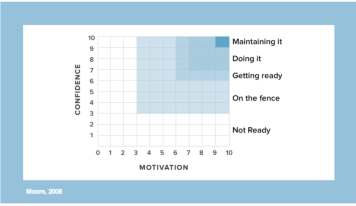
Jim Prochaska and his colleagues at the University of Rhode Island defined 5 stages in change: precontemplation (not ready, not aware, con’s are higher than the pro’s), contemplation (on the Fence, pro’s and con’s compensate themselves), preparation (Getting ready, pro’s start to outweigh the con’s), Action (doing it) and Maintenance (maintaining it). Research shows that 80% of us are in precontemplation or contemplation phase, no surprise it is so hard to change and achieve our goals.

2 main factors influence our ability to change (and therefore achieve our goals): Motivation (how bad do you want it?) and Confidence (how much do you believe in your ability to achieve it?)

Here is a graph from Margaret Moore which shows that to be more likely to change (achieve your goal), you need to be above 6 in motivation and confidence.
confidence motivation graph

So, when setting a goal, check-in with yourself: How motivated are you? and how confident you can achieve it are you? If you are not confident enough, ask yourself what do you need to feel more confident? You might also want to start with things where your confidence is higher, because achieving some goals will increase your confidence in being able to achieve other goals. And if you are not motivated enough, read the next paragraph.

3 sorts of motivations:

  • External: someone asking/telling you to do something. Obviously, this sort of motivation only is very limited.
  • Guilt (I should do this): this one might work but won’t lead to sustainable engagement.
  • Intrinsic (you really want to) à this is what you want to tap into. To do so, finding a clear WHY and asking yourself what will achieving your goal do for you will help.

Attached / Resigned cycle vs Commitment

When we set a goal, we are usually attached to achieving it no matter what, which might add some pressure or feel stressed when setting these goals. We might think that if we don’t achieve them, we are losers, we beat ourselves up and it will decrease our confidence. We move on to achieve them and then, when we don’t see the result we expect, when we have setbacks, when the deadline approaches, we fall right away into resignation. We don’t believe we can achieve them any more.

What I found very helpful was to come from a place somewhere else than on the attachment/resignation line, a place of Commitment. What are you committed to, no matter what and as long as the possibility exists? If you stay committed to something beyond your goals, 5, 10, 20 years from now (serving people, developing yourself, living an extraordinary life, etc…) and committed to do your work day after day, no matter if you reach your goal or not, you’ll be in a far better place. You’ll have created new things, you’ll have new experience, you’ll have grown. At the end of the day, no matter if you failed or not, you’ll have given it all. To me, Commitment is such a powerful thing.

Being vs Doing

We often think about what we need TO DO to achieve our goals, which is of course necessary, but rarely do we think about who we need to BE or BECOME: how do we show up in the world, what are our internal limiting beliefs, what are our fears, how our being is aligned with our doing? I found working on who I be in the world has been crucial for me so far. As I shared in my last 2018 post, I have achieved things in the past year but the most important, which outweigh the frustration to not have achieved more, is that I can feel some internal shifts which are the foundation for an even better year.

That’s it and that was long enough, so I will leave you with some questions: what do you want to create this year and further down the road? What would excite you most? What strategy are you going to set up, what mindset will you have? What support will you get?

Take care,

Evan

What’s that December Feeling?

Photo-by-Anton-Darius-@theSollers-on-Unsplash.jpg

Photo by Anton Darius @theSollers on Unsplash

There we go. December, end of the year, time for reflection and to start envisioning the next year…

This period can bring a mix of feelings: frustration to not have achieved all you wanted, pride for what you have actually achieved, eagerness to take a holiday break, excitement to start a new year, pressure to set new goals knowing you won’t achieve them all, etc…. And to some people, it can feel like a burden.

A few weeks ago, I started to feel tensed because we were approaching the end of the year and I knew I hadn’t achieved all I wanted. And as a high-achiever and driven person, I hate not achieving my goals. I felt frustrated. AND… I also knew it was OK. And I knew all this was just in my head. I needed to clear my mind.

So, I asked myself: how do I want to feel in this period? And how I wanted to feel was: complete and OK with this year whatever happened, at peace with myself, ready to enjoy that magical time with family and friends.

I then asked myself: what do I need to feel this way? And what I needed was not to check all my goals in details, I just needed to take a look at the big picture of my year, to catch the essence of what it had looked like, to feel OK with it and move on to what’s next.

I could extract the essence of my year:

  • On the DOING side, I achieved some important things (to me): I coached some awesome clients to move on toward what they REALLY want in their life, business, career, and I supported top athletes to perform to their best in collaboration with great coaches, I created new programs, I started and maintained to write consistently both about personal/professional development and sport mental preparation, I started to write a book on mental preparation.


  • On the BEING part, I am not the same person than I was at the beginning of the year. I invested more than ever in my own development, setting the foundations for an exponential growth. I did some transformational work with my own coach, attended intensives, joined a fantastic group coaching program. I explored vulnerability, developed even more confidence and leadership. My learning of different approaches such as ontological coaching (study of our being) and the neuro sciences behind coaching helped me understand how our mind and our brain are killing most of our possibilities, that our own limiting beliefs really get in our way to be both more Successful and more Fulfilled and that we can create whatever we want to create in our lives, should we sit with possibilities instead of killing them, be committed, perseverant, creative and patient.


So Now I feel complete for 2018 and relieved from the burden of goals review or goal setting, ready for whatever will show up in 2019. I’ll write more about this when we are there, but the words that come to me right now for 2019 are: discomfort (I need and want to get more uncomfortable since that’s where you really grow) and impossible (exploring the impossible).

To conclude, as one of my brilliant coaches put it recently in her invitation to let go of 2018:

  Your hands can do much more than just hold onto stuff. Free hands can create magic. See, if you had your hands full of stuff (whatever the stuff is), and I asked if you wanted a piece of delicious cake, and you wanted it, you would need to put down what you were holding, to free up your hands for whatever you wanted to receive, right?

  Even if you were holding something awesome, you’d still need to put it down to accept what I was offering you.

  Don’t get me wrong: sometimes we’re holding awesome stuff, and sometimes we’re holding old crap we don’t want: either way, the point is you can’t pick up anything new when your hands are full.

   This second week of December is going to focus entirely on you letting go of 2018, AS IS. This means that no matter what happened, or didn’t happen, you’re going to release it, call it done, and let it go.

  Again, why? Because then you will have free hands (remember the magic). And you will have space. Which is awesome, because you have a whole new year of new possibility ahead of you, and you will be able to put cool awesome things into all that empty space.

  Remember, you don’t have to let go of anything, ever (many people never do), but consider this your invitation to experience moving out of one year and into a new one with intention and space for what lies ahead.

 It feels like this is what I did in my own way. I am now moving into the Christmas season lighthearted, ready to enjoy time with family and friends back in France, ready to disconnect (yes, time without internet and no data on the cell phone!  OK, I will probably upload my emails and usual reads once in a while with whatever Wifi I will find, but overall it will be disconnected time) and ready to jump in 2019 with a lot of space for new exciting things.

So, what’s your December feeling? What do you want to do about it?

I wish you a wonderful holiday season and I’ll see you in 2019!

Take care,

Are you a perfectionist?

Photo by Jonathan Hoxmark on Unsplash

I remember that when I was doing my first job interviews 20 years ago, I used to put perfectionist in my weaknesses actually thinking it was not such a bad thing (You know, you have to tell the interviewer your strengths and your weaknesses and usually you look for weaknesses that are not so terrible, right?).

But I actually didn’t see the real shadow of perfectionism. The more I move on in my coaching journey, doing my inner work, the more I realize the costs of being a perfectionist. You see, perfectionism is great, until it is not anymore. It usually puts you on a successful journey because you are doing a great job at anything you engage into. But when it becomes automatic and not a choice anymore, then it gets in the way for you to be even more successful and to go to the next level in your life or business.

When you are a perfectionist:

  • You want everything to be perfect so you spend hours fine tuning whatever you do, whereas you could actually spend this time elsewhere. You might even leave things in work, unfinished, because then there is always the possibility to correct or improve.
  • You overanalyze everything, trying to optimize and prepare for all that can go wrong and when things occur not according to plan, you get frustrated.
  • You are so afraid to make the wrong decision that you don’t make any decision, or it takes ages to make that decision.
  • You care too much about what people think about you (this is common to lots of people but being a perfectionist makes it even worth) and it holds you back.
  • You lack confidence because you don’t really see the good things you are achieving, you mainly focus on what could have been better.
  • Eventually, you don’t take risks, you don’t do what you are scared of, you don’t get uncomfortable. You move on a perfect conventional, linear path and you miss opportunities for deep learning, breakthroughs and exponential growth.

“No one is perfect” is a common saying but it has been overused. It can make a great excuse for not doing our best, not taking responsibility and not owning our imperfections. But getting clear on our imperfections, owning them and making a conscious choice about what to do with them, that’s where the breakthrough is.

So, are you a perfectionist? What are the benefits of it? What are the costs of it? Can you own your imperfections? What do you want to do with them?

You know what? I have been rereading and rewriting this post numerous times already, because of course I want it to be perfect 😊. And right now, I feel it is not, there is something I can’t quite articulate and I don’t like it. And this is why I am going to stop here and press send!

Take care,

Evan

The 3 levels of conversation

Photo by rawpixel on Unsplash 2

I have already introduced Conversational Intelligence® (C-IQ), developed by Judith E. Glaser in a previous POST.

Today, I want to zoom in on a specific theme which is the different levels of a conversation.

We can differentiate 3 main levels of conversations:

  • Level 1Transactional (Tell and Ask), which is basically an exchange of information. The intention is to inform and to confirm what we know. We listen to protect; the trust is low. With a healthy mindset, we exchange information, we validate what we know, but with an unhealthy mindset or if we are unaware, we might fall into the Tell-Sell-Yell syndrome, with a tendency to tell more than to listen or ask.
  • Level 2Positional (advocate and Inquire), where we exchange power to convince. The intention is to defend what we know. We listen to Accept or Reject; the trust is conditional. With a healthy mindset, there is an opportunity for influence and to seek win-win solutions but with an unhealthy mindset or lack of awareness, we might fall into what is called “Addicted to being right”, with an overuse of telling and asking questions only to persuade. We are trying to convince the other person we are right and are not open to any other point of view. And let’s be honest, this happens very frequently.
  • Level 3: Transformational (Share and Discover), where we exchange energy and co-create. The intention is to discover what we don’t know. We listen to connect; the trust is high. With a healthy mindset, we hold the space to explore uncharted territory, we ask questions for which we have no answer. If we don’t pay attention though, the pitfall is inaction and more ideation than execution.

In every level, there is a release of oxytocin (bonding hormone) when we are in healthy conversations and mindset and release of cortisol (stress hormone) when we fall into the downside of it. For instance, an “Addicted to being right” behavior triggers high level of cortisol, and the level 3 is the one that enable the release of the highest level of oxytocin which will create the bonds and the trust that will move the team or company forward.

These distinctions are incredibly powerful when it comes to improving communication skills in a team. So, my invitation for you is to become more and more aware of the level of conversation you are in at work (with colleagues, managers, direct reports or clients), at home, in sport, and see when you need to switch to a different level. Within the next 2 weeks, play with this and let me know what you observed.

If you want to know more about Conversational Intelligence®, you can go THERE or you can contact me to see how I could support you, using these framework and tools, to develop trust and team efficiency, in your business or company.

 Take care,

Evan

If you want to change, aim for a plastic stretch , not an elastic one

ross-findon-303091-unsplash

For some time now, I have been playing with the idea of a plastic stretch in our way to behave. This is the kind of concept you get when like me, you are an engineer who turned into a coach…

For those who are not familiar with it, here is the difference from a mechanical perspective of an elastic deformation and a plastic deformation:

  • The elastic deformation is a reversible one: If you apply a stress on a material, it will deform. When you release the stress, the material will go back to its initial state (like an elastic).
  • The plastic deformation is an irreversible one which needs a higher stress to reach. In this case, when you release the stress, the material will go back to an intermediate state with a permanent residual deformation (like a chewing gum).

When we want to make durable changes in our way of doing or being, we need to reach this plastic zone and sometime we have to go extreme to make sure we reach it. Otherwise, if we stay in the elastic zone, we might just change for while but when our motivation decreases or our old habits come back, then we go back to that initial state without any residual benefit.

A personal story

At the end of the school year, one of my sons was having a hard time staying quiet in class, for different reasons (lot of energy, picking things quickly etc…) and he was often bursting out as soon as a question was asked to answer it, which was disturbing the whole class. After discussing with the teacher, I thought about what we could do to help him and it was clear that just telling him to try and not answer so often or so energetically wouldn’t work. So, I tried this plastic stretch idea.

I discussed with him his way to react and made sure he understood and was willing to try and change it.

Then I asked him if he was up for a challenge (Note 1: asking permission to really have him on board.  Note 2: making it like a game or even a challenge often helps and I know my son likes challenges).

I challenged him to not answer ANY question the next day, no matter what. I also said he could explain this challenge to the teacher if it made him more comfortable. That seemed really hard for him, he had to think and convince himself that he wanted to play. Then he said yes.

Note: we also dug into:

  • What made him want to answer so strongly? He said he wanted his teacher to know that he knew the answer, so I assured him that she knew, no matter if he answered the questions or not, which helped him with this (Note N3 changing a habit is hard so trying to understand what exactly is preventing us from changing is key)
  • What he could do to help himself on his challenge. He came with putting his hands under his butt, which I found was a great idea (Note N4: asking the other person to come with their own solution is really powerful and is key in coaching).

Although it was hard, he succeeded, we celebrated (“yeah, you didn’t answer any of the teacher’s questions, congratulations!”) and we decided to continue the next days. He also succeeded the 2nd day and on the 3rd day, he couldn’t help answering a few times. That’s being plastic and not elastic (he didn’t go back to his bursting moments all along the day but just to answering some questions). After checking if he was still up for the challenge, he then succeeded in not answering for the next couple of days and then we decided to stop playing this challenge but to keep the awareness and automatisms developed so he could then answer in a more self-aware and less extreme way, which the teacher confirmed later (Note: It was the end of the year so we’ll see how he does next year 😊).

How does that apply to you?

If you are a manager and want to improve your listening, take on the challenge to spend a whole meeting, or day or week, by only asking questions (not allowed to give your opinion, justify yourself or give arguments about why you think it should be another way).

If you want to develop your capacity to say NO, spend a week saying NO to everything (you can explain your challenge is that makes it easier).

If you hate asking for some help, spend a week asking for help for anything, even when you don’t need.

If you are afraid of asking for referrals in your business, ask all the persons you are going to meet this month for some referrals, without being attached to get some, just to practice.

The point is not to sustain that “extreme” behavior forever, but to train your muscle to DO things differently or to BE different. And by aiming at a plastic stretch, you won’t go back to your initial way of behaving, you will keep some residual impacts forever.

Finale notes:

  • To go extreme doesn’t mean the change has to be big. It’s the way you apply it that has to be extremely different.
  • Commitment is key. If you want to play this game, you have to commit to play full out from the start.
  • Understand what might get in the way for you to change and come with some strategy to help you make those changes (like my son’s putting his hands under his butt)
  • Just as the elastic and plastic behaviors of the materials depend on the characteristics of the material, everyone will have a different experience with this depending on their personality.
  • My former colleagues will remind me that if you increase the stress too high and go beyond the plastic zone, you will reach the rupture, so please don’t go there.

Now is your turn to play: What plastic stretch do you want to challenge yourself with?

If you want to discuss about it, or need an accountability partner, just reach out to me.

Take care,

6 insights from the Rich Litvin Intensive

IMG_9924

A couple of weeks ago now, I attended the Rich Litvin Intensive in Santa Monica, Los Angeles. This was the first time I was flying to attend an event live in the frame of my personal and professional development, most of my previous training and development having been done online or over the phone, including reading and watching videos from Rich. Beyond the content of the intensive which was powerful, I wanted to share the 6 insights I had by just BEING there, because it applies to anyone and anything in work, business and life.

  • Vulnerability: In a world where we always need to look good, strong, to know everything, having the space to be authentic and vulnerable was scary AND so appreciable. This enabled self-reflection and strong, deep connections between individuals. And I believe any organization / business should do the same. When you share with your colleagues something you never shared or tell them “what I don’t want you to know is …”, it creates a totally different relationship. But for that, you need to create a safe space first (this is another full topic for a post).


  • Authenticity = BE YOU: so simple, right? and yet so difficult. Clarifying who we deeply are and who we want to be in this world, then being that person without being afraid of the judgment of others is a long process. But I have no doubt that the higher level of external achievement AND internal fulfillment will be by being YOU.


  • Walk your Talk: The leader of the intensive, Rich, really walked his talk: he believes in that the job of a leader is to create more leaders, not more followers and he put many leaders on stage instead of him. He believes in vulnerability as a super power and he was vulnerable on stage. He believes in being uncomfortable, bold and demanding and he intensely demonstrated it. It is about integrity: Say what you Think and Do what you Say. As a manager, a parent, a sport or professional coach, if you  walk your talk, FULLY, then you will get the trust of everyone. But it can go away in a moment if you get caught up not walking your talk.

  • Feeling vs thinking, Embodying vs Understanding: I personally shifted from intellectually understanding Rich’s principles to really experiencing and feeling them. And this is much more powerful. This is where real transformation happens. I you have known things you should change for some time and you don’t act upon them, try to find a way to involve your feeling and emotions. If you are a leader, try to have your team feel your message rather than just understand it in their head. As Maya Angelou said:

         “I’ve learned that people will forget what you said, people will forget what you did,                  but people will never forget how you made them feel.”

          This is true in a negative and in a positive way.

  • Caring: I could observe that Rich, the team and the attendees were caring, no matter what happened. It was not about showing off or being right. I was not fake. No matter who the person was involved in a conversation, in an exercise, this person was cared for.

         “People don’t care how much you know until they know how much you                                      care” (Theodore Roosevelt)

          Before focusing on the tasks, start to care for people and let them know. The                rest will come naturally. 

  • The power of a Community: I was amazed by the people who attended the intensive, by the achievements of some and the mission of others, by the doing of some and the being of others. I found a real community that I know I can reach out for support, ideas, fun and more. When you find your community, you’ll get much further and faster than on your own.

As a conclusion:

Before the intensive, I was 90% in.

After the intensive, I shifted to 100% because of the above.

Where can you apply this in your life/work?

Take care,


How do you sustain your motivation as an athlete (or in any other part of your life)?

Motivation 1

Motivation is one of the key mental skill of the The Wheel of Mental Performance.

It can be seen as the internal and external factors that stimulate desire and energy in people to be continually interested and committed to an activity and to make an effort to attain a goal. Motivation results from the interaction of both conscious and unconscious factors such as the:

(1) intensity of desire or need,

(2) incentive or reward value of the goal,

(3) expectations of the individual and of his or her peers.

How do you sustain your motivation when the road seems long and monotonous, during the less exciting period of the season, during the tough winter time, when you doubt or when the results are not there?

Here are some suggestions:

  • Find and understand your Why: the first and key factor in motivation is to understand why you are doing your sport and what you want to get out of it. And then remind yourself of this Why when feeling demotivated.
  • Early on, make the decision to CommitThe power of commitment is huge, this is what will really keep you on track each time you want to just give up. It has to come from within. It is saying to yourself that no matter what, you will continue to work toward your goal.
  • Set up Intermediate Goals that seem closer than the big end goal.
  • Create an Inspiring Vision and visualize it every day. It will keep it fresh at the top of your mind and help go through difficult times.
  • Create a Positive Outlook: focus on the positive rather than complaining, find opportunities in every difficulty or set back, focus on and celebrate small achievements.
  • Practice being Focused and Relaxed as it will ease to stay motivated
  • Vary your work outs to avoid monotonous training and avoid to be bored and make it Fun (for instance, set some intermediary fun goals/meets)
  • Get some Support, whether from the coach, your friends and family, etc…
  • Build a Sport/Life balance: vary your interests, socialize and meet with friends, eat and rest properly, get appropriate support, have an open heart, take some time to pause and reflect etc…

So, how motivated are you?


Conversational Intelligence, the Neurochemistry of Trust and Successful teams and organizations

HOW-THE-5-BRAINS-WORK

I have worked in various corporate organizations and observed that what we call the soft skills are actually the harder to get and the ones with the most significant impact on the organization’s success. This is one of the reasons I transitioned to coaching. And this is why I was trained at Conversational Intelligence which I would like to introduce today.

“To get to the next level of greatness depends on the quality of the culture, which depends on the quality of relationships, which depends on the quality of conversations…”   (Judith E. Glaser).

Developed by Organizational Anthropologist and Executive coach Judith E. Glaser, by whom I had the pleasure and honor to be trained, Conversational Intelligence® (C-IQ), a new and innovative framework, is the hardwired, and learnable ability to connect, navigate and grow with others – a necessity in building healthier and more resilient organizations in the face of change.

Whereas EQ is mainly about self-regulation (I-centric), C-IQ is about Co-regulation (WE-centric). C-IQ begins with TRUST, and ends with high quality relationships and business success.

In school we learn grammar and punctuation, but where do we learn to really have difficult conversations? Some people may have it naturally or gain it over the years, but they don’t really get taught that anywhere along the way. And this is what C-IQ really does for you – it teaches you how to have these conversations, to stop avoiding them, to connect with people, build the relationships that result in TRUST. When we trust each other, we can learn together even through change and difficult tasks.

Conversational Intelligence is about COMMUNICATION

Research show that 9 out of 10 conversations miss the mark.

“I know that you believe you understand what you think I said, but I am not sure you realize that what you heard is not what I meant.”

– Robert McCloskey during a Press Briefing about the Vietnam War

 Conversational Intelligence is about TRUST

Google learned From its Quest to Build the Perfect Team (NY Article HERE) that the best teams had:

– conversational turn-taking = equal time of talking by team members

– average social sensitivity = empathy, sensitivity towards colleagues

This is the concept of psychological safety which is to allow space to speak up and take risks.

Conversational Intelligence is about NeuroSciences

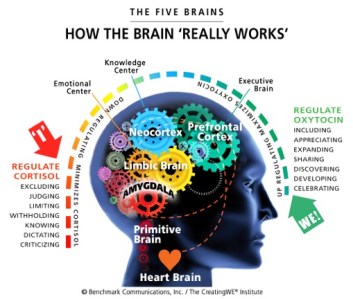
It gives us insight into how our brain responds during conversations and how conversations activate our trust and distrust networks in our brain. Conversational Intelligence elevates Oxytocin, the chemistry of Connection, and lowers Cortisol, the chemistry of fear and distrust.

What is great with this is that it is not limited to the workplace, it can be applied in the education system, in personal relationships or in sport teams.

Take some time to think about the level of trust in your team or organization. How high or how low is it? How is the quality of the conversations? Of the relationships? How is it impacting the team or organization’s efficiency?

Take Care,

Evan


Awareness leads to Choice and Choice leads to Change

Awareness leads to Choice …

… and Choice leads to Change

Since the beginning of my journey as a coach, this quote has been one of the most important for me and has been very impactful with some clients.


Imagine you are in a boat going down the river of life but you don’t have anything in the boat to control anything, neither the global route, neither the instantaneous direction, neither the speed. You are just going where it takes you.

Then you put some magical awareness glasses on.

Now you can see that you have a map in the boat, to help you see where you are, where you want to go and one main logical way to get there. If you keep your glasses on longer and go deeper, you can actually see many other ways and you can choose the one that best suits you.

Now you see you there is an engine that will help you speed up when you want (when inspired, full of energy etc…) or slow down when you need (never thought you would need a break?), even stopping on the bank to enjoy.

You can also see that you have a rudder to orientate your boat and avoid crashing on some rocks, someone else’s boat, or take a path that seems easier, faster or more fun.

The first step is therefore to find and wear your magical awareness glasses as often as possible. Increasing awareness requires some self-reflection, might require to press the pause button in your life. But just like practicing a sport, an instrument or learning at school or in your job, the more you practice developing your awareness the more it becomes easy and natural.

Then, as soon as you become aware of a situation, of a pattern in your behavior, of your impact (which might be different from your intention), of your procrastination, of something you should stop, aware of your thought, of your emotions, … then you have a choice:

  • Either to change (and it might not be easy)
  • Either to stay in the same situation

There are no right or wrong answers, just a choice… meaning that we have much more control than what we often think. Sometimes, we are on automatic pilot after years of habits and are not even aware of our reactions or behavior. Sometimes we are aware but tell ourselves stories, find excuses to justify our actions or inactions. With our thoughts and emotions, it might be even harder since they can be very quick and intense, but we still have a choice to let them take control or not.

Knowing that awareness leads to a wider menu of choice is very empowering, expand the possibilities for action, which in turn leads to a higher likelihood of successful results and at the end, to a more intentional life.

Take some time to reflect on this and let it sink in. Maybe it will click right now, maybe in some days, or even in some months…

Take care and happy Christmas time !

Evan


People live from their perception

People live from their perception

This is one of the guiding principle I learned when trained to become a coach. We all live from our perception of a reality that we see and interpret through our personal filter determined by our beliefs, our past experience, our values, our fears, etc… This is natural and what is important is to become aware of it in order to remain as open minded as possible, to avoid a potential lack of understanding of other people and to be less judgmental. This also helps us as coaches to more easily let the coachee find his own solutions rather than bringing our own solution.

Here are some illustrations, because sometimes pictures speak better than words:

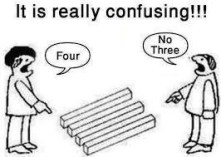
Confusing

So, who’s right?

If each person were open-minded enough to go and see from the other person’s perspective, they would be more likely to think: OK, this is not as clear as I thought, he may be at least as right as I am…”

Watch the following image. What do you see?

Lady young or old

A young lady or an old woman ? (the right eye of the old woman is the right ear of the young lady and the nose of the old woman is the chin of the young lady)

This is a well-known example but this illustrates very well that the reality can be seen and interpreted very differently. We can see a young lady or an old woman. And even if we both see an old lady, do we think she is sad, scary, neutral? This is the case for about anything in life.
For instance:

  • Last year, my younger son became upset when his 2 elder brothers did not want to show him what they were doing because they actually were preparing him a surprise. Even when they explained to him that they were making him a surprise, he didn’t calm down, still feeling hurt of being excluded, maybe because he did not really understand the goal of the ongoing action or maybe because he understood but it was more important for him to be part of the group and participate rather than to get a surprise. Each one had a good reason to react the way they did and only the difference in their perception of the situation led to the dispute. That’s when Dad had to say “OK guys, come on and let’s talk” …
  • Another example in the corporate world: some managers might be very directive because they have always been in a directive environment and they consider it effective and a proof of leadership but their employees might see that as a lack of trust and empowerment toward them. And vice versa, some employees might see their “not directive” manager as lacking authority, or indecisive. All this depending on their past experience and internal beliefs.

Uncovering these gaps in perception is key to create the best outcome possible in our relationships and therefore in our personal life or business. It doesn’t mean we have to approve the others’ point of view but to be open-minded and acknowledge this different perception without judgment, which allows for more possibilities in the end.

How is the perception of your employees, you colleagues, your boss, your clients, your friends, different from yours?
What are you 100% sure (and is there actually anything that you are 100% sure) and what is based on your personal filter?
What can you do about it?