
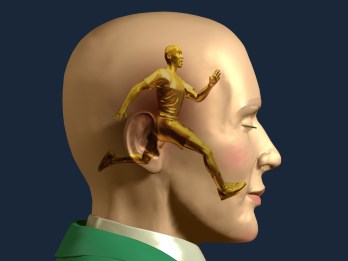
The Power of Mental Imagery

shutterstock_164141909 Mental Training

Mental Imagery, sometimes called visualization, has been used for a longtime mainly by elite athletes to improve their performance. Most common examples are related to sports where you have some complex body moves like divers or aerial ski jumpers, or to high speed sports like downhill ski or luge/skeleton. But it can be very useful for any sport. I myself used it when I was a swimmer. I actually didn’t really know much about it, it was just a way for me to prepare and even more important, feel ready for my swim.

Mental imagery is the most powerful way to train your body and neural pathways between physical practices, to prepare for a situation and / or to create the state of mind you need. It’s much more precise to send an image to your brain and body than to try and explain it with words.

What science says about visualization:

  • According to neurosciences, mental imagery impacts many cognitive processes in the brain: motor control, attention, perception, and memory.
  • Mental imagery activates the same zones in your brain and the same neural pathways as the real physical activity. If you would put sensors on your quad muscles and make measurements while visualizing yourself running, you would detect electrical impulses in the muscles, meaning you are activating the same circuits in your body. This doesn’t mean you can train only by staying in your couch (unfortunately for some 😊), because the strength of the activation is much lower, but it strengthens these neural pathways.
  • Images may be an efficient way of coding or representing instructions for movement.
  • Mental imagery is broader than just a visual representation and should bring in the 5 senses for more efficiency (visual, auditive, kinesthetic, smell, taste). We remember much more through senses. As an example, I did a lot of skydiving years ago and the memory is much more vivid with the smell of the gas of the plane, feeling the wind and the noise when the door opens, and feeling the sensations in my body when diving than with just seeing myself dive.

How can Mental Imagery be used:

  • To rehearse some specific movements and strengthen the neural pathways involved in your activities
  • To prepare for various situations that might happen: visualize the ideal scenario, how you want thing to happen but also scenario A, B, C which might occur during a competition (weather conditions, being down in a game, falling in your race, etc…). If you see it in your head again and again and again, then you will know what to do when it happens and not panic. This also enables to reduce the sensation of going into the unknown and therefore lowers your stress level.
  • To strengthen your state of mind (confidence, thriving with pressure, focus, resilience,  etc…) by (re)playing the way you want/need to.
  • To focus on the positive and get rid of negative thoughts.
  • To virtually practice during the off season or when injured (rehearsing your games, your moves, your meets on a regular basis) in order to come back a step ahead rather than a step behind due to the absence of training.

  For those who want more, HERE is an interesting article related to mental imagery during 2014 winter Olympics.

  You can start by visualizing yourself doing your race, playing your game, or focusing on a specific goal. And find your own way to do it. It might be hard at first and take time but that how it’s going to be the most effective. Note: this can be used in your life too, before a school test, or before an important meeting. See yourself doing great, getting the results you want, and also see how things can turn and how you want to respond when that happens.

My way to use mental imagery with the athletes I coach:
I create an audio MP3, using specific techniques and skills to guide them through a specific visualization to prepare for an important event, improve some mental skills or work on specific moves and I send this audio to them. They can listen to it whenever they want, on their way to practice, at night, before a game or competition. On the long term we build a playlist with different mental imageries with specific themes (peak performance, focus, confidence, free to fail, Keep Fun, prepare for meet A or game B etc…) and the athletes can pick in this library depending on their needs.

 If you are interested in using mental imagery as a tool to improve your performance and keep fun, contact me and I’ll give you an example of what it looks (sounds) like.

Take care,

Evan

The 3 levels of conversation

Photo by rawpixel on Unsplash 2

I have already introduced Conversational Intelligence® (C-IQ), developed by Judith E. Glaser in a previous POST.

Today, I want to zoom in on a specific theme which is the different levels of a conversation.

We can differentiate 3 main levels of conversations:

  • Level 1Transactional (Tell and Ask), which is basically an exchange of information. The intention is to inform and to confirm what we know. We listen to protect; the trust is low. With a healthy mindset, we exchange information, we validate what we know, but with an unhealthy mindset or if we are unaware, we might fall into the Tell-Sell-Yell syndrome, with a tendency to tell more than to listen or ask.
  • Level 2Positional (advocate and Inquire), where we exchange power to convince. The intention is to defend what we know. We listen to Accept or Reject; the trust is conditional. With a healthy mindset, there is an opportunity for influence and to seek win-win solutions but with an unhealthy mindset or lack of awareness, we might fall into what is called “Addicted to being right”, with an overuse of telling and asking questions only to persuade. We are trying to convince the other person we are right and are not open to any other point of view. And let’s be honest, this happens very frequently.
  • Level 3: Transformational (Share and Discover), where we exchange energy and co-create. The intention is to discover what we don’t know. We listen to connect; the trust is high. With a healthy mindset, we hold the space to explore uncharted territory, we ask questions for which we have no answer. If we don’t pay attention though, the pitfall is inaction and more ideation than execution.

In every level, there is a release of oxytocin (bonding hormone) when we are in healthy conversations and mindset and release of cortisol (stress hormone) when we fall into the downside of it. For instance, an “Addicted to being right” behavior triggers high level of cortisol, and the level 3 is the one that enable the release of the highest level of oxytocin which will create the bonds and the trust that will move the team or company forward.

These distinctions are incredibly powerful when it comes to improving communication skills in a team. So, my invitation for you is to become more and more aware of the level of conversation you are in at work (with colleagues, managers, direct reports or clients), at home, in sport, and see when you need to switch to a different level. Within the next 2 weeks, play with this and let me know what you observed.

If you want to know more about Conversational Intelligence®, you can go THERE or you can contact me to see how I could support you, using these framework and tools, to develop trust and team efficiency, in your business or company.

 Take care,

Evan

Why staying composed in sport is important and how hard is it – Serena Williams’ example.

silhouette-3577338_1280

If you follow tennis, you have probably seen or heard of Serena Williams breakdown during last Grand Slam US Open final. At 6-2, 1-0 for her opponent, Serena got a 1st warning for being coached from the stands by her coach (through signs and gestures) which is not allowed and which he didn’t deny after the match, saying that he had never been warned for coaching in his career and that every coach was doing this all year long. Serena apparently didn’t see the gestures of her coach and went toward the umpire: “I don’t cheat, I’d rather lose than cheat” she told him. She took this warning personally, as an attack to her own integrity.

She later smashed her racket furious of having lost an advantage and got a 2nd warning. After the minute rest, she again spoke to the umpire: “this is incredible. I wasn’t coached. I don’t cheat, I have never cheated in my life, I have a daughter and I defend what’s right, you ow me some excuses”.

Later in the game, still upset, she aggressively told him: “You attacked my person. You have insinuated that I cheated. You’ll never referee one of my matches again. You are the liar, You ow me some excuses. Say it, say it!”. She then treated him of “thief” and finished with “don’t talk to me, don’t talk to me”. She eventually got a 3rd warning, which meant a penalty with 1 additional game given to her opponent. Serena couldn’t believe it and further exploded, broke in tears and finally lost the set and the match.

My point here is not to blame Serena and give lessons to her. She is a great champion who has accomplished an amazing career with 23 Grand Slams and she was on her way back after giving birth to her daughter and aiming at that 24th Grand Slam that would place her at the 1st place with Margaret Court so there was a lot at stake in this final. My goal is to point out a few lessons from this event:

  • First, even great champions may have a hard time to stay composed. So, don’t blame yourself when you don’t stay composed. It’s hard simply because we are humans and have emotions. Now if you keep bursting out, breaking down, not controlling your emotions and don’t work on it to improve, then you can blame yourself.


  • Second, when you are ruminating negative thoughts, your energy and attention goes there and not on your task, on your strategy, or in your body. Negative emotions are a huge energy drain. If your overall energy and focus is like a plastic glass full of water, it’s like having holes all around that will empty the glass very quickly. So, if you don’t manage to refocus on the task and keeps these thoughts in your head and emotions in your heart, you’ll have less energy, less mental focus and play worse. You’ll lose control of the game. It’s better to let go of it for now and come back to it after the game.

  • What could you do in this situation?
    • First, get prepared: imagine something similar happens, and choose how you want to Respond (instead of React). What do you want to remind yourself in that moment? Visualize yourself responding the way you want.
    • In the moment, you can remember the 3Ps: Pause, Process, Proceed.
      • Pause to not being pulled in this vicious circle of negative emotions (just a few second give some space to not react and enable a clearer thinking of the situation),
      • Process what would be the best way for you to respond: what is triggering you? what are the consequences of such response?, etc…
      • Proceed with how you chose to respond.
    • Refocus on the task and let go of these thoughts and emotions. It’s not easy and you need some anchors and triggers to make it a new habit. An easy start is just to take a few slower than usual breaths and repeat “I inhale calm(or composure)” … I exhale tension (or frustration or whatever the word is for you)…”. There are also some more advanced emotions management techniques I usually teach my clients to ease that process and that impact the heart rate directly, not only the “mental/head” part of it.
    • Practice, practice and practice. Knowing something won’t serve if you don’t practice. You need to reset your automatism and that happens only by practicing, not (only) by reading a blog post 😊

If you want to improve your mental and emotional games, reach out to me for a complimentary introduction.

Take care,

The importance of Resilience in Sport

One of the 8 mental skills I identified in the WOMP (Wheel of Mental Performance) is Resilience and is usually known as the capacity to bounce back after a setback, whether it is after a loss or a bad performance (going into the next game or next competition) or during a game after a mistake or bad play, or when being led by the other team.

A more general definition I learned from the Heartmath institute is that Resilience is the capacity to prepare for, recover from and adapt in the face of stress, challenge or adversity. This definition was made in relation to stress and emotions management but can be used in a more general way. It emphasizes the fact that we can:

  • Prepare for some situations in order to better RESPOND when facing them, rather than just REACT to what happens.
  • Adapt in the moment when a stressful or challenging situation arises
  • Recover from a setback and not let it impact our future performance

During games and competitions, through a season, a high school or college period, or through a whole career, there will be hard times, there will be downs, with lost games, poor performance, and injuries. Having the capacity to accept it and to move on will make the difference between those who sustain on the long run and those who quit or lose faith, determination and energy.

 Here are a few examples of a strong resilience:

  • Short term resilience: I recently gave an example of resilience during a world cup soccer game Here.
  • Long term Resilience: Roger Federer, Rafael Nadal and Novak Djokovic all had to deal with injuries in the past years and with the loss of confidence that often comes with it. All of them were resilient enough to continue to work and believe in themselves despite their inability to play at their best for months and even years,  not winning any Masters or Grand Slam, being eliminated early in tournaments, going down in the world ranking. And they are now back at their best level (Nadal won 2 Grand Slams in 2017 and 1 in 2018 and is world number 1, currently in semifinal at the US Open; Federer, world number 2, won 2 Grand Slams in 2017 and 1 in 2018, Djokovic’s come back is more recent and after winning Wimbledon in July, is in semi-final at the US Open)
  • Injury related Resilience: Ait Said, a French gymnast aiming at an Olympic gold medal, after already being unable to participate to the 2012 Olympics due to an injury, broke his leg on the first day of competition during the 2016 Olympics when landing after a jump. Can you imagine the frustration, the desperation of such a thing? It means as far as Olympics are concerned, which is the main objective in gym, that it’s 8 years lost! Well the next days, from the hospital where he had had surgery, here is what he wrote on social media: as soon as I am back on my feet, believe me, we’ll go back to training and go for the gold! (in the next Olympics in 2020). If his body is sometimes weak, his mental is unbreakable.

Here are a few things you can do to build your resilience:

  • Short term resilience (on the spot, during a game or competition)
    • Prepare for scenarios where you make a mistake, or take a slow start, or don’t feel physically well, and decide how you want to respond in this situation.
    • Find a mental trigger to let go of the mistakes you make. Some golfers might grab a handful of grass to represent the bad play and throw it away, as a symbol that it’s gone; some soccer players I coach use a word like “Refocus”.
  • Long term resilience:
    • Don’t generalize a past poor performance (the past doesn’t predict the future), remember times when you performed well, and find evidence that you can perform better in the present and in the future (more training, better preparation and readiness, etc…)
    • Look for stories about athletes you admire and what they overcame, and use them as an inspiration when you are going through tough periods.
    • Use positive self talk
  • Injury related resilience:
    • Use the time when you are injured to work on things you usually don’t have time to, like other parts of your body, or strategies, etc.
    • Use specific techniques like mental imagery to work your moves or keep your mindset positive and prepare your come back.

If you want to seriously improve your resilience or any other mental skills with specific techniques and support, contact me to learn about my different options.

If you want to change, aim for a plastic stretch , not an elastic one

ross-findon-303091-unsplash

For some time now, I have been playing with the idea of a plastic stretch in our way to behave. This is the kind of concept you get when like me, you are an engineer who turned into a coach…

For those who are not familiar with it, here is the difference from a mechanical perspective of an elastic deformation and a plastic deformation:

  • The elastic deformation is a reversible one: If you apply a stress on a material, it will deform. When you release the stress, the material will go back to its initial state (like an elastic).
  • The plastic deformation is an irreversible one which needs a higher stress to reach. In this case, when you release the stress, the material will go back to an intermediate state with a permanent residual deformation (like a chewing gum).

When we want to make durable changes in our way of doing or being, we need to reach this plastic zone and sometime we have to go extreme to make sure we reach it. Otherwise, if we stay in the elastic zone, we might just change for while but when our motivation decreases or our old habits come back, then we go back to that initial state without any residual benefit.

A personal story

At the end of the school year, one of my sons was having a hard time staying quiet in class, for different reasons (lot of energy, picking things quickly etc…) and he was often bursting out as soon as a question was asked to answer it, which was disturbing the whole class. After discussing with the teacher, I thought about what we could do to help him and it was clear that just telling him to try and not answer so often or so energetically wouldn’t work. So, I tried this plastic stretch idea.

I discussed with him his way to react and made sure he understood and was willing to try and change it.

Then I asked him if he was up for a challenge (Note 1: asking permission to really have him on board.  Note 2: making it like a game or even a challenge often helps and I know my son likes challenges).

I challenged him to not answer ANY question the next day, no matter what. I also said he could explain this challenge to the teacher if it made him more comfortable. That seemed really hard for him, he had to think and convince himself that he wanted to play. Then he said yes.

Note: we also dug into:

  • What made him want to answer so strongly? He said he wanted his teacher to know that he knew the answer, so I assured him that she knew, no matter if he answered the questions or not, which helped him with this (Note N3 changing a habit is hard so trying to understand what exactly is preventing us from changing is key)
  • What he could do to help himself on his challenge. He came with putting his hands under his butt, which I found was a great idea (Note N4: asking the other person to come with their own solution is really powerful and is key in coaching).

Although it was hard, he succeeded, we celebrated (“yeah, you didn’t answer any of the teacher’s questions, congratulations!”) and we decided to continue the next days. He also succeeded the 2nd day and on the 3rd day, he couldn’t help answering a few times. That’s being plastic and not elastic (he didn’t go back to his bursting moments all along the day but just to answering some questions). After checking if he was still up for the challenge, he then succeeded in not answering for the next couple of days and then we decided to stop playing this challenge but to keep the awareness and automatisms developed so he could then answer in a more self-aware and less extreme way, which the teacher confirmed later (Note: It was the end of the year so we’ll see how he does next year 😊).

How does that apply to you?

If you are a manager and want to improve your listening, take on the challenge to spend a whole meeting, or day or week, by only asking questions (not allowed to give your opinion, justify yourself or give arguments about why you think it should be another way).

If you want to develop your capacity to say NO, spend a week saying NO to everything (you can explain your challenge is that makes it easier).

If you hate asking for some help, spend a week asking for help for anything, even when you don’t need.

If you are afraid of asking for referrals in your business, ask all the persons you are going to meet this month for some referrals, without being attached to get some, just to practice.

The point is not to sustain that “extreme” behavior forever, but to train your muscle to DO things differently or to BE different. And by aiming at a plastic stretch, you won’t go back to your initial way of behaving, you will keep some residual impacts forever.

Finale notes:

  • To go extreme doesn’t mean the change has to be big. It’s the way you apply it that has to be extremely different.
  • Commitment is key. If you want to play this game, you have to commit to play full out from the start.
  • Understand what might get in the way for you to change and come with some strategy to help you make those changes (like my son’s putting his hands under his butt)
  • Just as the elastic and plastic behaviors of the materials depend on the characteristics of the material, everyone will have a different experience with this depending on their personality.
  • My former colleagues will remind me that if you increase the stress too high and go beyond the plastic zone, you will reach the rupture, so please don’t go there.

Now is your turn to play: What plastic stretch do you want to challenge yourself with?

If you want to discuss about it, or need an accountability partner, just reach out to me.

Take care,

Learning from the World Soccer Cup: the importance of Resilience during a game

On the way of France team to their final Victory in the soccer World Cup, the game against Argentina (France 4 – Argentina 3) was the shifting moment of their competition, the match during which they built (or confirmed) the confidence that nothing could stop them, even a tight game against Belgium (France win 1-0) and a suffering against a brilliant Croatia in finale (France win 4-2).

During this game against Argentina, France was led 2-1 at the beginning of the 2nd half time and that’s when right back defender Benjamin Pavard chose his time to make an “out of the blue” goal that put the team back on track at a crucial moment. This goal was a little bit irrational to some people (see video HERE). However here is where it came from according to Pavard:

“It is rare that I attempt such a shot, even in practice. I like the move but I never do it. I felt a little guilty on the 2nd goal from Argentina (he led to the free kick and also made a small mistake on the goal itself). I had to react, to not give up, show that I was mentally tough. My objective was to make an assist pass or score a goal. When I hit the ball, I told myself to hit it not too strong and aim at the goal. If I hadn’t been at fault on the 2nd goal of Argentina, I might have not gone that up the field” (and been in the position to score).

This is a great example of resilience. Instead of ruminating his mistake and getting distracted by these negative thoughts, he used this mistake to motivate himself (intention to make an assist or a goal) and to be even more focused on the task hand (where to go on the field, focusing on his gesture while hitting the ball etc…)

Next time you make a mistake or have a bad time during the game, here is what you can do:

  • Let go of the mistake, it belongs to the past
  • Use that mistake to motivate you even more
  • Refocus on the task at hand and not the outcome of the game

—-

How to keep your kids/athletes motivated? (for coaches and parents)

watching-and-worring-1530074

Motivation is a key mental skill that I identified in the Wheel of Mental Performance. I already wrote about how to sustain your motivation as an athlete and in this post, I want to address how to keep athletes motivated (for coaches and parents).

If you want to improve your athlete’s motivation, you have to start to understand what motivates them (win, have fun, be part of a group, be fit, please parents, etc…) and what makes their motivation to drop (lose, have no or little fun, being excluded, stagnating, etc…).

There is no one size fits all strategy. As a coach or as a parent, specifically when being oneself a former athlete, it is hard to let go of one’s personal motivations and the desire to transmit that. It doesn’t mean that it shouldn’t be part of the process but that there should be no attachment to it being necessarily the right and only way.

Tips to improve your kids motivation:

  • Find what motivates demotivates your athlete. Find their individual Why and for team sports, provide the team’s WHY.
  • Adapt to each athlete, keeping in mind their unique greatness: challenge the ones who need it, make smaller tasks for those who need to reinforce their feeling of being successful etc…
  • Be inspiring (tell stories), show enthusiasm and walk your talk
  • Adopt a Growth mindset (effort and possibility oriented, anyone can improve in anything through effort and determination) rather than a fixed mindset (results oriented, “you are good at this” or “you are weak at that”). If they identify as bad, they will be de motivated, if they identify as naturally good, they will be completely disturbed when they face bigger adversity with better opponents and at the next level (High school, College, higher league etc…) and this might demotivate them.
  • Focus on the process (following a strategy, doing one’s best, etc…) rather than on the outcome of the games (win or lose) and celebrate small (and of course big) achievements.
  • Be mindful of external rewards as they might make the athletes to play for these rewards and not for the fun and enjoyment of their sport
  • For parents: it’s hard but try to be more of a cheerleader than a coach

So, how motivating will you be?


The Happiness Equation

happy-face-1191165-1920x1280

Last year, I attended a webinar by Mo Gawdat. Mo is the Chief Business Officer for Google and he wrote a book called “solve for Happy”. This was a very moving one as Mo’s engagement in the pursuit of happiness came from his son’s death.

Mo couldn’t relate to the usual books about happiness so he decided to take an engineering approach to this difficult topic. Having myself an engineering background, his approach resonated quite well with me and I thought I would share my 2 main takeaways from this webinar.

  1. Happiness is the absence of unhappiness

Wait, what? isn’t that obvious? Not really. Isn’t it true that we are constantly looking for more?  Well, Mo says that happiness is our default mode when we were born (just think about all these cute baby smiles). Then, just like we add weird apps on our phones to perform more and more functions, we add more and more things to achieve in our lives, for personal reasons, for social reasons. We add more and more distractions too. We create so many expectations and so many illusions. All this drains our energy and takes us away from our default mode. Just like the apps decrease our phone’s batterie and sometimes prevent it from working normally.

So, we won’t reach happiness by adding more apps but by resetting.

Note: this is consistent with all the mindfulness movements and other meditative practice.

  1. The Happiness Equation

My take away is the following equation for Happiness:

Solve-For-Happy-1

We are happy when life gives us what we expect or more.

But actually, it is our thoughts that make us unhappy. Mo give the following example:

While you are buying something, your car gets hit by a truck.

  • Scenario 1: Someone you love waits in the car and gets out of it safe: you feel happy and grateful because the person is safe.
  • Scenario 2: the person you love is also away from the car buying something else: then you’re unhappy because the car got crushed.

Same result in both scenarios: the person you love is safe and the car is broke. But the end result emotion and sense of happiness are not the same, the only difference comes from your thoughts and your perspective of the situation. So his equation becomes:

Solve-For-Happy-2Basic mathematics: If we want to increase our happiness, we need to increase the positive perception of the events in our lives. And it requires practice…

I also see another way to use his equation: if we want to increase our happiness, we can also lower our expectations (basic math again). Don’t get me wrong, it doesn’t mean lowering our ambition, our motivation, our inspiration, it means lowering our expectations of how things should happen.

In my business, there are times I know I need to lower my expectations because I have other things to focus on and therefore less time to work on it, and if I don’t, I get frustrated and unhappy.

And if you don’t expect the weather to be wonderful during your next hike and lower your expectations to “only” be in nature, with family or friends, you won’t get as frustrated if the clouds show up.

As the saying goes, the richest person is not the one who has most but the one who needs less.

So what are your expectations?

How do you perceive events in your life, in your work?

How can you play with this equation for more happiness?

Take care,

Evan

6 insights from the Rich Litvin Intensive

IMG_9924

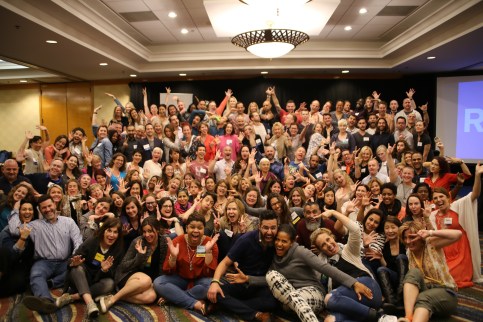
A couple of weeks ago now, I attended the Rich Litvin Intensive in Santa Monica, Los Angeles. This was the first time I was flying to attend an event live in the frame of my personal and professional development, most of my previous training and development having been done online or over the phone, including reading and watching videos from Rich. Beyond the content of the intensive which was powerful, I wanted to share the 6 insights I had by just BEING there, because it applies to anyone and anything in work, business and life.

  • Vulnerability: In a world where we always need to look good, strong, to know everything, having the space to be authentic and vulnerable was scary AND so appreciable. This enabled self-reflection and strong, deep connections between individuals. And I believe any organization / business should do the same. When you share with your colleagues something you never shared or tell them “what I don’t want you to know is …”, it creates a totally different relationship. But for that, you need to create a safe space first (this is another full topic for a post).


  • Authenticity = BE YOU: so simple, right? and yet so difficult. Clarifying who we deeply are and who we want to be in this world, then being that person without being afraid of the judgment of others is a long process. But I have no doubt that the higher level of external achievement AND internal fulfillment will be by being YOU.


  • Walk your Talk: The leader of the intensive, Rich, really walked his talk: he believes in that the job of a leader is to create more leaders, not more followers and he put many leaders on stage instead of him. He believes in vulnerability as a super power and he was vulnerable on stage. He believes in being uncomfortable, bold and demanding and he intensely demonstrated it. It is about integrity: Say what you Think and Do what you Say. As a manager, a parent, a sport or professional coach, if you  walk your talk, FULLY, then you will get the trust of everyone. But it can go away in a moment if you get caught up not walking your talk.

  • Feeling vs thinking, Embodying vs Understanding: I personally shifted from intellectually understanding Rich’s principles to really experiencing and feeling them. And this is much more powerful. This is where real transformation happens. I you have known things you should change for some time and you don’t act upon them, try to find a way to involve your feeling and emotions. If you are a leader, try to have your team feel your message rather than just understand it in their head. As Maya Angelou said:

         “I’ve learned that people will forget what you said, people will forget what you did,                  but people will never forget how you made them feel.”

          This is true in a negative and in a positive way.

  • Caring: I could observe that Rich, the team and the attendees were caring, no matter what happened. It was not about showing off or being right. I was not fake. No matter who the person was involved in a conversation, in an exercise, this person was cared for.

         “People don’t care how much you know until they know how much you                                      care” (Theodore Roosevelt)

          Before focusing on the tasks, start to care for people and let them know. The                rest will come naturally. 

  • The power of a Community: I was amazed by the people who attended the intensive, by the achievements of some and the mission of others, by the doing of some and the being of others. I found a real community that I know I can reach out for support, ideas, fun and more. When you find your community, you’ll get much further and faster than on your own.

As a conclusion:

Before the intensive, I was 90% in.

After the intensive, I shifted to 100% because of the above.

Where can you apply this in your life/work?

Take care,


How do you sustain your motivation as an athlete (or in any other part of your life)?

Motivation 1

Motivation is one of the key mental skill of the The Wheel of Mental Performance.

It can be seen as the internal and external factors that stimulate desire and energy in people to be continually interested and committed to an activity and to make an effort to attain a goal. Motivation results from the interaction of both conscious and unconscious factors such as the:

(1) intensity of desire or need,

(2) incentive or reward value of the goal,

(3) expectations of the individual and of his or her peers.

How do you sustain your motivation when the road seems long and monotonous, during the less exciting period of the season, during the tough winter time, when you doubt or when the results are not there?

Here are some suggestions:

  • Find and understand your Why: the first and key factor in motivation is to understand why you are doing your sport and what you want to get out of it. And then remind yourself of this Why when feeling demotivated.
  • Early on, make the decision to CommitThe power of commitment is huge, this is what will really keep you on track each time you want to just give up. It has to come from within. It is saying to yourself that no matter what, you will continue to work toward your goal.
  • Set up Intermediate Goals that seem closer than the big end goal.
  • Create an Inspiring Vision and visualize it every day. It will keep it fresh at the top of your mind and help go through difficult times.
  • Create a Positive Outlook: focus on the positive rather than complaining, find opportunities in every difficulty or set back, focus on and celebrate small achievements.
  • Practice being Focused and Relaxed as it will ease to stay motivated
  • Vary your work outs to avoid monotonous training and avoid to be bored and make it Fun (for instance, set some intermediary fun goals/meets)
  • Get some Support, whether from the coach, your friends and family, etc…
  • Build a Sport/Life balance: vary your interests, socialize and meet with friends, eat and rest properly, get appropriate support, have an open heart, take some time to pause and reflect etc…

So, how motivated are you?